Sep 8, 2026Product Information
Can LED Lights Really Last 10 Years? The Truth About L70, Drivers, and Real-World Lifespan
LED chips often last 10+ years, but cheap drivers and poor heat management cause early failures. Choose constant-current drivers and aluminum heatsinks for real-world longevity.
If you’ve shopped for LED lighting recently, you’ve probably seen bold claims: “Up to 50,000 hours of light!” or “Lasts 10+ years!” These numbers sound impressive—but do they hold up in actual installations? The short answer is sometimes, but not always. And the reason might surprise you.
Let’s cut through the marketing hype and look at what really determines how long an LED fixture survives in the real world—and why the driver matters more than the chip.
What Does “L70” Actually Mean?
Unlike old-school incandescent bulbs that fail with a sudden pop, LEDs fade gradually. The industry uses the L70 benchmark—the point at which the light output drops to 70% of its original brightness. At that level, most users notice a dimmer, less effective light, but the fixture isn’t “dead.”
Under perfect lab conditions (steady 25°C, no dust, ideal power supply), many LED chips can hit 30,000 to 50,000 hours before reaching L70. That’s roughly 10–17 years at 8 hours per day. So the chip itself can last a decade—but only if everything around it cooperates.
The Real Bottleneck: LED Drivers
If the chip is so durable, why do so many LED fixtures fail within 3–5 years?
The culprit is almost always the driver—the electronic circuitry that converts mains power into the low-voltage DC current the LED needs.
Most cheap drivers use electrolytic capacitors, which are highly sensitive to heat. For every 10°C rise in operating temperature, the capacitor’s lifespan roughly halves. In a poorly ventilated or enclosed fixture, internal temperatures can soar, turning a “50,000-hour” system into a 15,000-hour disappointment.
When a driver fails, you don’t get a gentle dim—you get flickering, color shifting, strobing, or sudden blackout. The LED chip may still be perfectly healthy, but without a working driver, it’s useless.
How to Choose LEDs That Actually Last
For facility managers, specifiers, and homeowners who want real longevity, here are three practical rules:
- Prioritize driver quality. Look for fixtures with IC constant-current drivers (often branded as Mean Well, Inventronics, or Philips) rather than cheap RC (resistive-capacitive) dropper circuits. Constant-current drivers regulate current more precisely, reducing stress on both the chip and the capacitor.
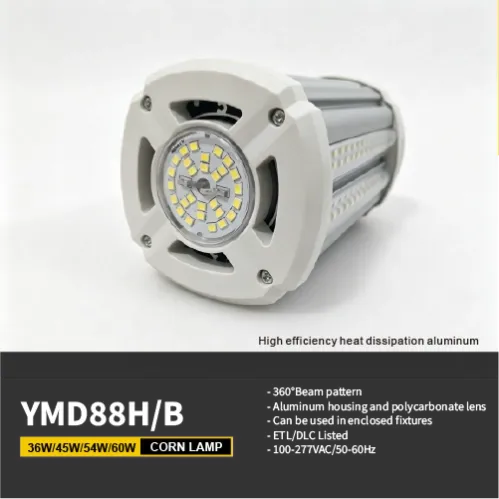
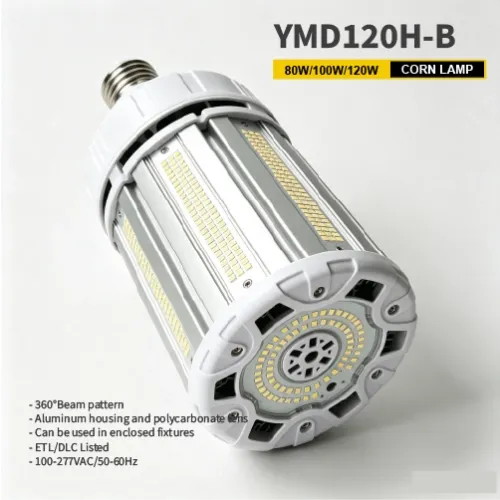
- Demand proper thermal management. A die-cast aluminum heat sink is non-negotiable for high-power fixtures. All-plastic housings trap heat and accelerate capacitor aging. Check for visible cooling fins and adequate airflow.
- Choose modular, repairable designs. For commercial or high-bay applications, select fixtures with external, replaceable drivers. When the driver dies (and it will, eventually), you swap it out in minutes instead of replacing the entire luminaire—saving money and reducing e‑waste.
The Bottom Line
Yes, an LED chip can last 10 years or more. But your fixture’s overall lifespan depends almost entirely on the driver and how well heat is managed. A cheap fixture with a poor driver may fail in 2 years; a well-engineered one with a quality driver and robust cooling can easily surpass the decade mark.
Next time you see “50,000 hours” on a box, flip it over and check the driver specs and housing material. That’s where the real story lies.
What’s your experience with LED longevity in the field? Have you seen drivers outlast the chip—or vice versa? Drop your thoughts below! 👇
#LEDLighting #LightingDesign #Sustainability #BuildingServices #LightingIndustry #Cleantech #FacilityManagement #EnergyEfficiency #ProductEngineering #TechInsights