Jul 31, 2026Industry Information
The Blueprint for Brilliance: A Comprehensive Quality Control Framework for LED Lighting
LED QC: material insp, SMT/AOI, photometric (flux, CCT, CRI), burn-in/L70, elec safety (Hi-Pot, surge), pkg validation. Ensures performance, safety, durability.
In the modern era of illumination, LED (Light Emitting Diode) technology has firmly established itself as the gold standard. Offering superior energy efficiency, exceptional longevity, and versatile design capabilities, LEDs have replaced traditional incandescent and fluorescent bulbs across residential, commercial, and industrial sectors. However, the sheer volume of LED products flooding the market has also brought significant challenges: inconsistent color temperatures, premature failures, and flickering issues. To distinguish a premium product from a substandard one, a rigorous, multi-stage Quality Control (QC) system is not just an advantage—it is an absolute necessity.
The journey of LED quality assurance begins long before the light is switched on. It starts at the very supply chain level, specifically with the selection of raw materials. The heart of an LED is the semiconductor chip, which must be sourced from reliable foundries. QC engineers utilize advanced spectrometers to verify the luminous efficacy and wavelength consistency of incoming chips. Simultaneously, other critical components—such as the phosphor powder (which determines color rendering), aluminum heat sinks, and optical lenses—undergo strict incoming material inspection (IQC). Any deviation in material purity can lead to catastrophic failures, such as color shift or heat buildup, later in the product's life.
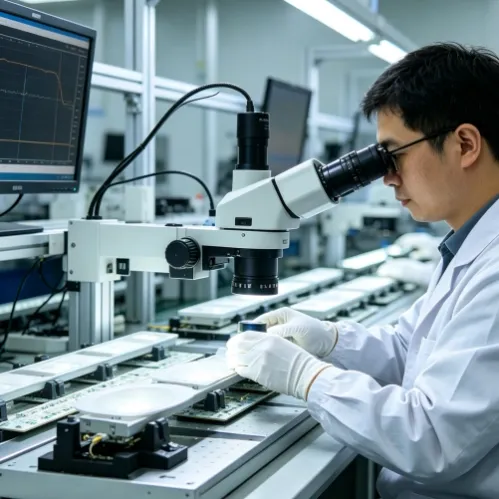
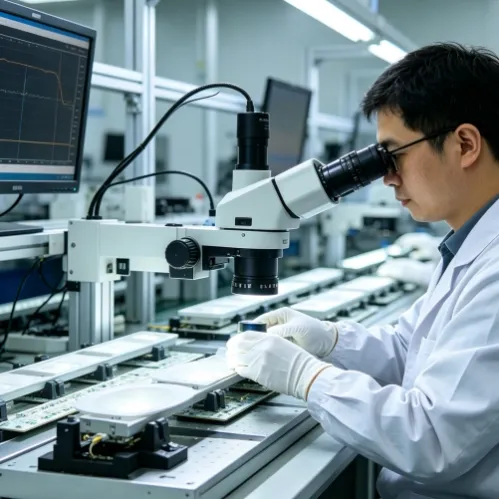
Following the initial material verification, the assembly process requires a meticulously planned In-Process Quality Control (IPQC). This is where the physical transformation takes place. The surface-mount technology (SMT) line is a critical checkpoint. Here, automated optical inspection (AOI) machines capture high-resolution images of the circuit boards to detect soldering defects, missing components, or poor component alignment. Because LEDs are susceptible to heat and electrostatic discharge (ESD), the IPQC team continuously monitors the temperature profile of the reflow ovens and the ESD-protection grounding of all assembly stations. A single static shock can permanently damage an LED junction without any visible outward signs, so strict environmental controls are paramount.

Once the final assembly of the lamp or bulb is complete, the product enters the Final Quality Control (FQC) stage. This stage is primarily performance-driven. Every batch of samples, and often 100% of the units, undergoes photometric testing in a specialized integrating sphere. This test measures critical parameters: Total Luminous Flux (brightness), Correlated Color Temperature (CCT), and Color Rendering Index (CRI). FQC must ensure that a "3000K Warm White" bulb delivers a light output that accurately matches its label, falling within an accepted tolerance (typically ±5% for flux and ±100K for CCT). If a batch fails to meet these metrics, it is rejected before reaching the packaging line.
However, a light fixture must not only work perfectly on the day it is produced; it must also withstand the test of time. To guarantee durability, Reliability and Life Testing is executed. This involves operating products in high-temperature aging ovens at temperatures up to 60°C to 80°C for 24 to 48 hours. This "burn-in" process exposes early manufacturing defects, often called "infant mortality" failures. Furthermore, a specific set of samples is subjected to a "Lumen Maintenance" test, running for thousands of hours to verify the L70 value—the point at which the LED's brightness degrades to 70% of its initial output. A high-quality product should take well over 25,000 hours to reach this threshold.
One of the most vital, yet often underestimated, aspects of LED QC is Safety Compliance and Electrical Testing. LEDs operate on low-voltage DC, but they require internal drivers to convert standard AC mains power. If these drivers are poorly designed, they can overheat or short-circuit. QC labs perform a series of rigorous tests, including Hi-Pot (High Potential) testing to verify insulation strength, power factor correction (PFC) measurements to ensure grid efficiency, and surge immunity tests to protect the fixture against lightning strikes and grid fluctuations. Adhering to global safety standards—such as UL (US), CE (EU), and CCC (China)—is a mandatory seal of approval. A product that fails these electrical safety tests is considered hazardous and is immediately scrapped.
In the modern manufacturing era, statistical process control (SPC) plays a supporting role in LED QC. Instead of testing every single unit for every possible parameter, companies use statistical sampling plans (like the MIL-STD-105E standard) to determine the Acceptable Quality Limit (AQL). If a batch's defect rate exceeds the established AQL, the entire lot is subjected to 100% manual re-inspection. This>Finally, the QC loop closes with Packaging and Shipping Inspection. Even the highest-quality light can be ruined by a bump during transit. The final FQA (Final Quality Assurance) team inspects the outer cartons for structural integrity, verifies the correct labeling of product specifications, and ensures that fragile glass parts are adequately cushioned with foam or air bags. Vibration testing is often simulated on a random sample to verify that the packaging can withstand long-haul shipping across the ocean.
In conclusion, the process of ensuring LED lighting quality is a complex, multi-layered discipline that extends from the microscopic semiconductor wafer to the final shipping container. It combines advanced photometry, strict electrical safety protocols, accelerated life testing, and robust supply chain management. In a market saturated with low-cost, poor-performing imitations, a comprehensive QC culture is the defining factor that builds consumer trust, reduces expensive product recalls, and truly ensures that the LED lamp not only lights up the room but does so safely, consistently, and for decades to come.